

Determine backpack size yourself
How to find the perfect fit
For the perfect fit of your dog backpack, all measurements are important. Here you will learn how to measure your dog’s shoulder height, back length, seat/lying width, and weight yourself to find the right size.
Find the perfect size for your backpack by determining your dog’s key measurements.
1. Measure the dog
To find the perfect fit, your dog’s back length and shoulder height are the most important measurements. It’s best to measure your dog while they are standing.
- Back length is measured from the withers to the base of the tail (where the tail begins).
- Shoulder height is measured from the ground to the highest point of the shoulder blade along the front leg.


2. Note shoulder height & weight
In addition to the space your dog needs to sit or lie down, shoulder height and weight are important factors when choosing the right backpack.
- Your dog’s shoulder height should be no more than 2 cm below the top edge of the window, so they can look out comfortably without bumping their head.
- Weight provides a basic guideline for the backpack’s load capacity. It’s an important reference but should never be the only factor in your decision.


3. Determine reclining width (optional)
Lying width is important if your dog should be able to lie down comfortably inside the backpack.
- How to measure: Measure your dog while they’re lying down relaxed with paws tucked in – from the widest point of the body to the base of the tail.
- Important: Inside the backpack, your dog will naturally curl up a bit for stability, so they won’t lie completely stretched out. A backpack that’s too wide can become unwieldy and less stable.
- Rule of thumb: The backpack width should roughly match your dog’s back length. If you want a bit more space, you can add up to 5 cm (2 in).
- Exception: In the MountainRock Backpack and ROOFPACKER, dogs usually curl up more while lying down.
- Recommendation: For dogs that like to lie down and look out, we recommend the PeakStone, Dachshund, Bulldog Backpack, or ROOFPACKER.

4. The right-angled triangle: The ultimate tip for dogs that sit
Seat width is crucial when your dog is supposed to sit comfortably in the backpack.
- Calculation (using the size calculator):
- Enter your dog’s back length and shoulder height into our calculator.
- Rule of thumb: Add about 10 cm to the calculated seat width. This value should be less than or equal to the backpack’s width.
- Applies to: PeakStone, Dachshund, and Bulldog models. For the MountainRock Backpack and ROOFPACKER, the space can be smaller.
- Direct measurement (using a measuring tape):
- Rule of thumb: When measuring seat width directly, the backpack should be about 3 cm wider to ensure your dog can sit comfortably.
- Applies to: PeakStone, Dachshund, and Bulldog models. For the MountainRock Backpack and ROOFPACKER, dogs can also sit slightly turned inside.

Calculate Seat Width
Enter your dog's shoulder height and back length.
5. Important Tips for the Perfect Fit
Here are the key rules to help you check the fit:
- Sitting vs. Lying Position: Keep in mind that your dog won’t always stay in the same position inside the backpack as they do on the ground. They’ll often curl up a bit or tuck in their paws.
- Individual Needs: Every dog’s proportions and every human’s body shape are different. That’s why we recommend reviewing the results based on your personal needs. This is the best way to ensure that your dog feels comfortable in the backpack and that it works well for you, too.
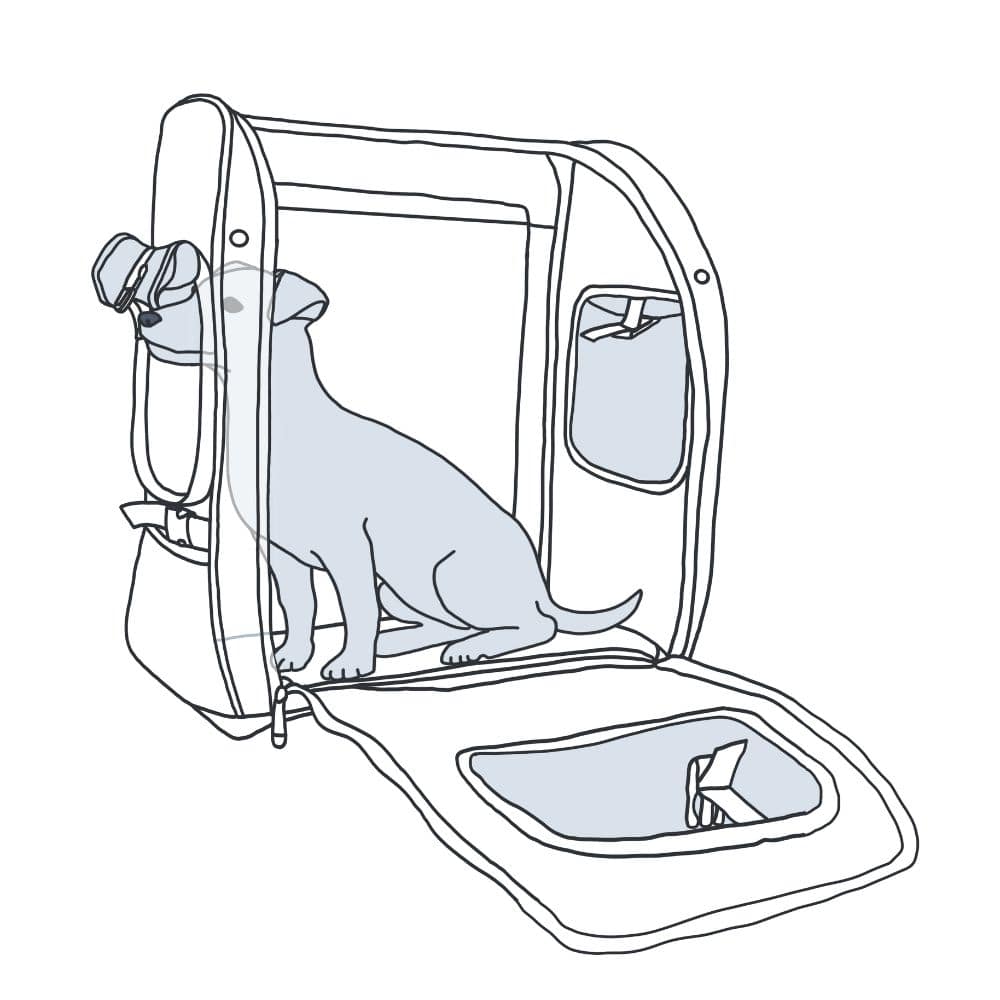
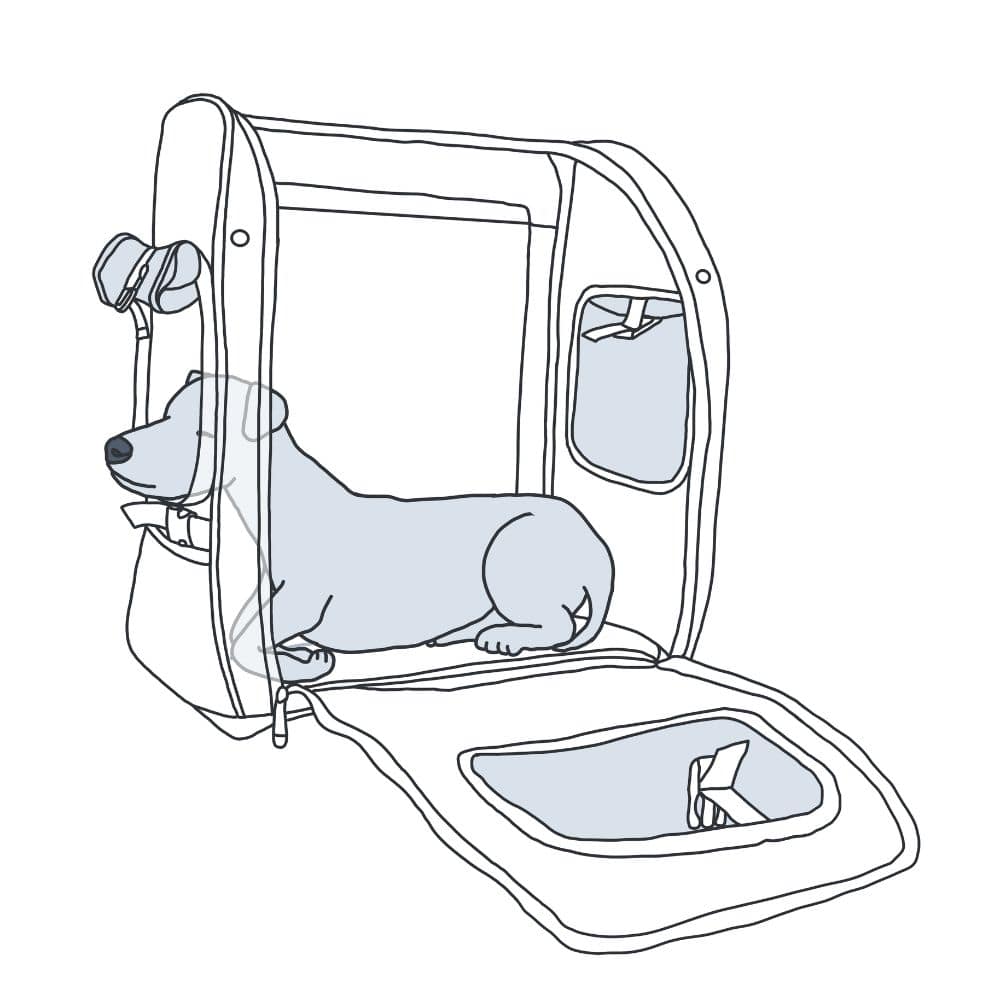
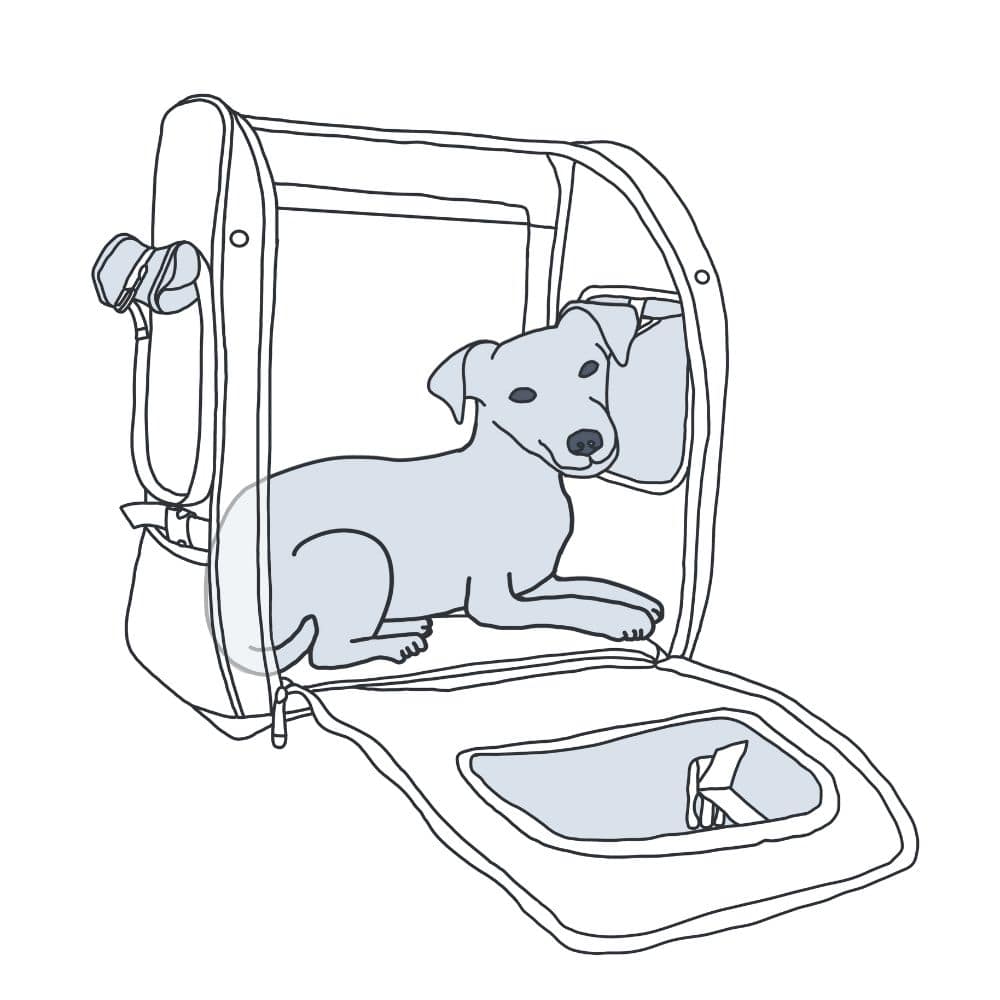
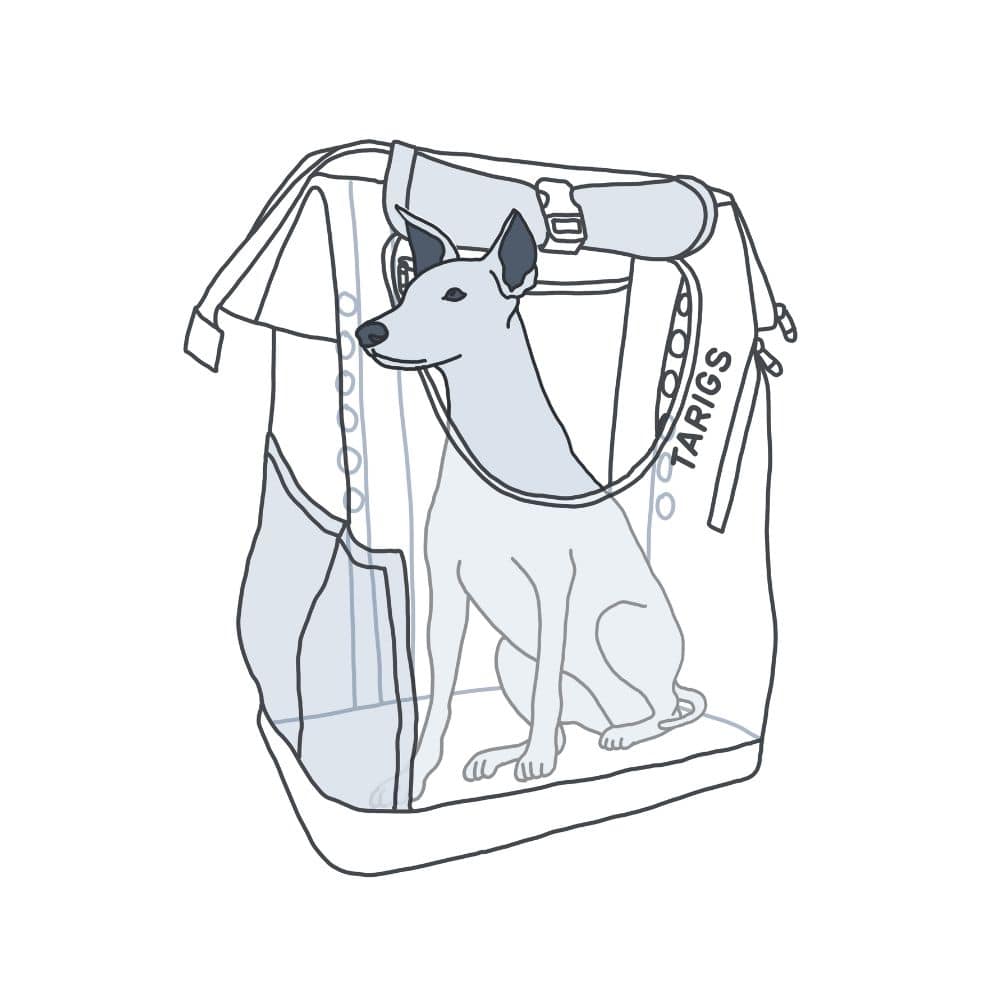
6. Example: PeakStone Backpack
It’s important to consider all measurements to find the right backpack size for your dog.
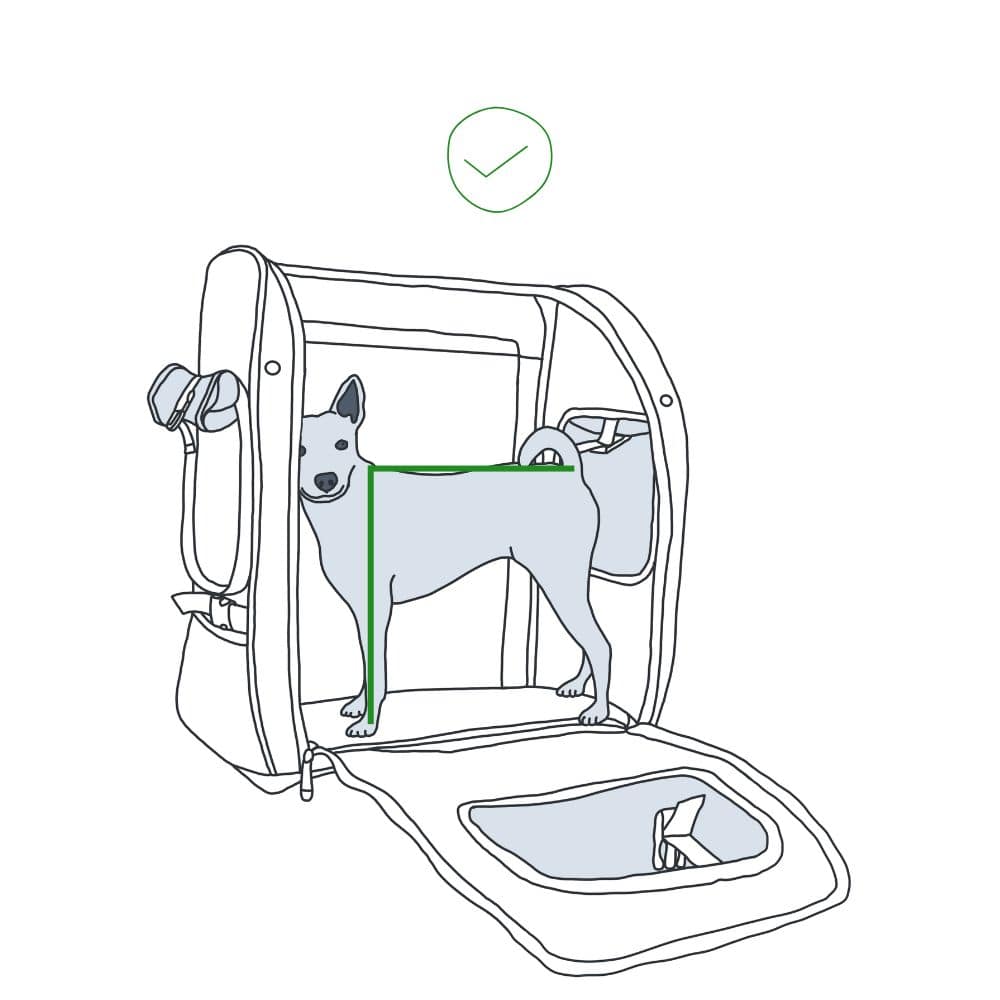
Example A: A square-shaped dog (shoulder height and back length are the same) fits in the backpack.
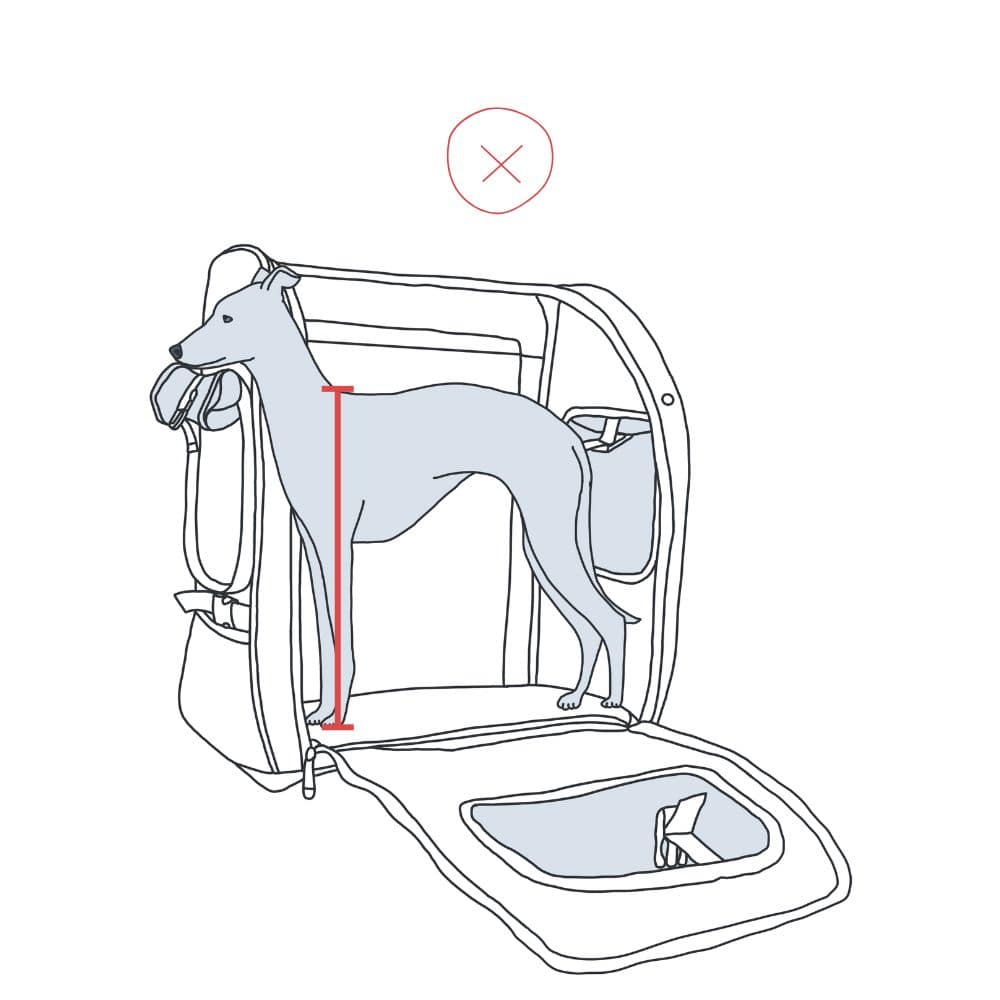
Example B:
A dog with shoulders that are too tall (not at least 2 cm below the window) does not fit in the backpack.
Solution:
Choose a larger size of the PeakStone Backpack – in this case, size Large.
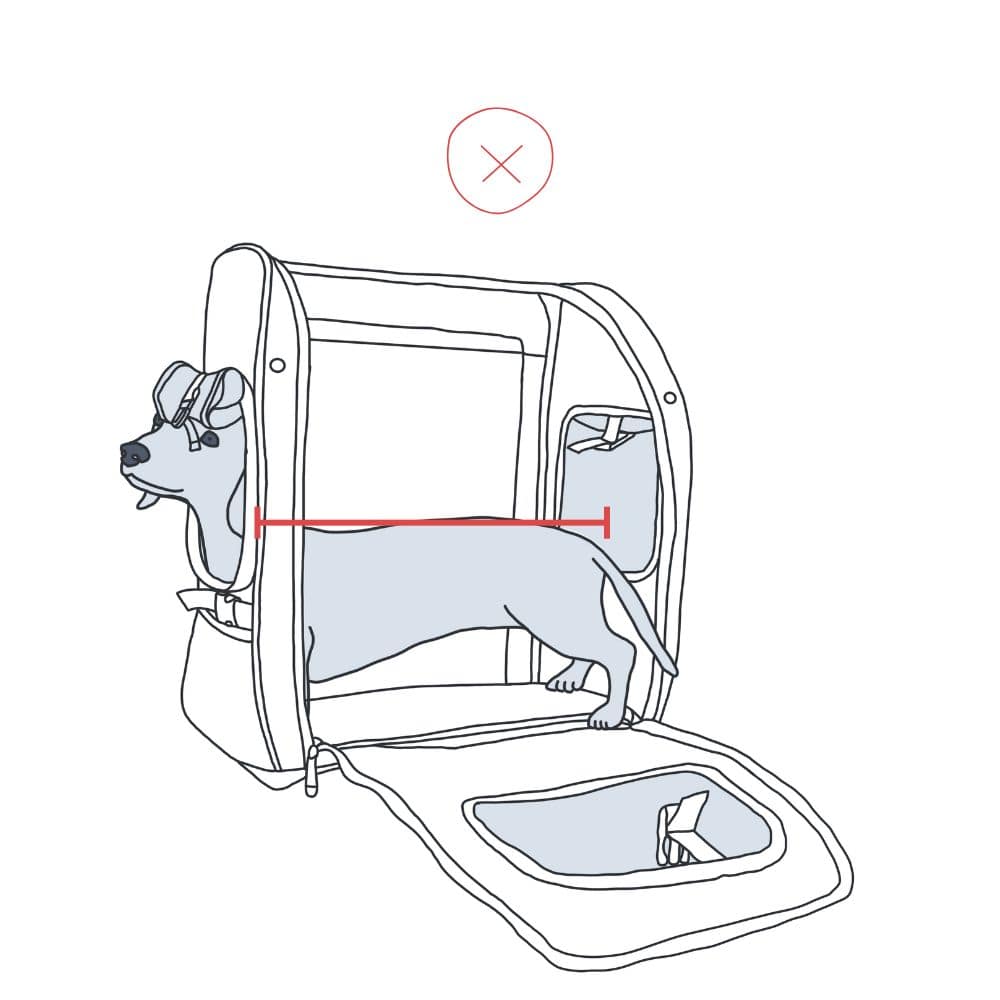
Example C:
A short (low shoulder height) but very long dog does not fit in the backpack.
Solution:
Choose a different backpack model that suits your dog’s body shape. In this case, the Dachshund Backpack.